

Let’s be honest—most of us live glued to our smartphones. We text, call, video chat, and scroll endlessly. So when someone mentions communication radios, it might feel like a throwback to the ‘90s or something only security guards use. But here’s the twist: communication radios are more relevant today than ever before.
Imagine you’re at a crowded music festival. Cell towers are overloaded. Your phone shows full bars, but your message just won’t send. Frustrating, right? Now picture a construction site in a remote area with zero cell coverage. Or first responders coordinating during a natural disaster when mobile networks are down. That’s where communication radios shine.
RadioRed are the first online store specialized in Radio Communication, you will find a wide range of portable, mobile, intrinsic radios, radio bases, repeaters, antennas and accessories from the main brands, Kenwood, ICOM, Motorola, Hytera, they are in Monterrey shipping to all of Mexico.
A Quick Overview of Radio Communication Technology
At its core, radio communication is beautifully simple. It uses electromagnetic waves—specifically radio waves—to transmit information wirelessly through the air. Think of it like tossing a message across space, invisible but powerful.
When you speak into a communication radio, your voice is converted into electrical signals. These signals are then encoded onto a radio frequency and transmitted via an antenna. Another radio tuned to the same frequency receives those waves, decodes them, and converts them back into sound. Almost like magic, right? But it’s pure physics.
The History of Communication Radios
Early Radio Inventions and Milestones
The story of communication radios begins long before walkie-talkies or police scanners. It starts with curiosity—humanity’s obsession with sending messages across distance without wires.
In the late 19th century, scientists like Heinrich Hertz proved the existence of electromagnetic waves. Shortly after, Guglielmo Marconi took things a step further by successfully transmitting wireless signals over long distances. In 1901, he sent the first transatlantic radio signal. Imagine the excitement—sending a message across the ocean without cables! It must have felt like stepping into the future.
The Evolution from Analog to Digital Radios
For decades, analog radios ruled the communication world. They were simple, reliable, and effective. You press the button, you talk, someone hears you. End of story.
Digital radios changed the game. Instead of sending a continuous wave, digital systems convert voice into binary data—ones and zeros. This data is compressed and transmitted efficiently. The result? Clearer audio over greater distances, with less background noise.
Modern Advancements in Radio Communication
Radio communication hasn’t stood still. In fact, it has quietly evolved in ways that most people never notice—unless they depend on it daily. Today’s communication radios are smarter, tougher, and more connected than ever before.
Modern radios now feature digital signal processing (DSP), which filters out background noise automatically. Picture a firefighter standing near roaring flames or a construction worker operating heavy machinery. Older radios would struggle in that environment. Today’s devices isolate the human voice and suppress surrounding chaos. The difference is night and day.
How Communication Radios Work
At first glance, a communication radio seems simple. Press a button. Speak. Someone hears you. But under the hood, there’s an elegant dance of physics and engineering happening in milliseconds.
When you speak into the microphone, your voice creates sound waves. The microphone converts those sound waves into electrical signals. These signals are then modulated—essentially layered—onto a specific radio frequency carrier wave. This process allows your voice to travel through the air as electromagnetic radiation.
The antenna then broadcasts that signal outward. Radio waves travel at the speed of light. When another radio tuned to the same frequency receives those waves, its antenna captures them. The device demodulates the signal, converts it back into electrical impulses, and sends it to the speaker. Your voice emerges on the other end, almost instantly.
Understanding Radio Waves
Radio waves are a form of electromagnetic energy. They’re invisible, silent, and constantly moving around us. Wi-Fi, Bluetooth, television broadcasts—all rely on radio waves.
The key to radio communication lies in frequency. Frequency determines how far a signal travels and how it behaves around obstacles. Lower frequencies can travel longer distances and penetrate objects better. Higher frequencies provide clearer audio but may struggle with barriers.
Transmitters, Receivers, and Antennas Explained
The transmitter generates the radio signal. It takes your voice signal and attaches it to a carrier frequency. Power output matters here—higher wattage typically means greater range, but it also consumes more battery and may require licensing.
The receiver does the opposite. It listens for signals on a specific frequency. When it detects one, it processes and converts it back into audio. High-quality receivers are sensitive and selective. They can pick up weak signals while ignoring unwanted interference.
Frequencies, Channels, and Bandwidth
When using communication radios, you operate on specific frequencies organized into channels. A channel is simply a designated slice of the frequency spectrum.
Bandwidth refers to the width of that slice. Narrowband systems allow more users to share the spectrum efficiently. Many regulatory bodies now require narrowband operation to reduce congestion.
Types of Communication Radios
Communication radios come in many forms, each tailored to specific environments and needs. Let’s break them down.
Two-Way Radios (Walkie-Talkies)
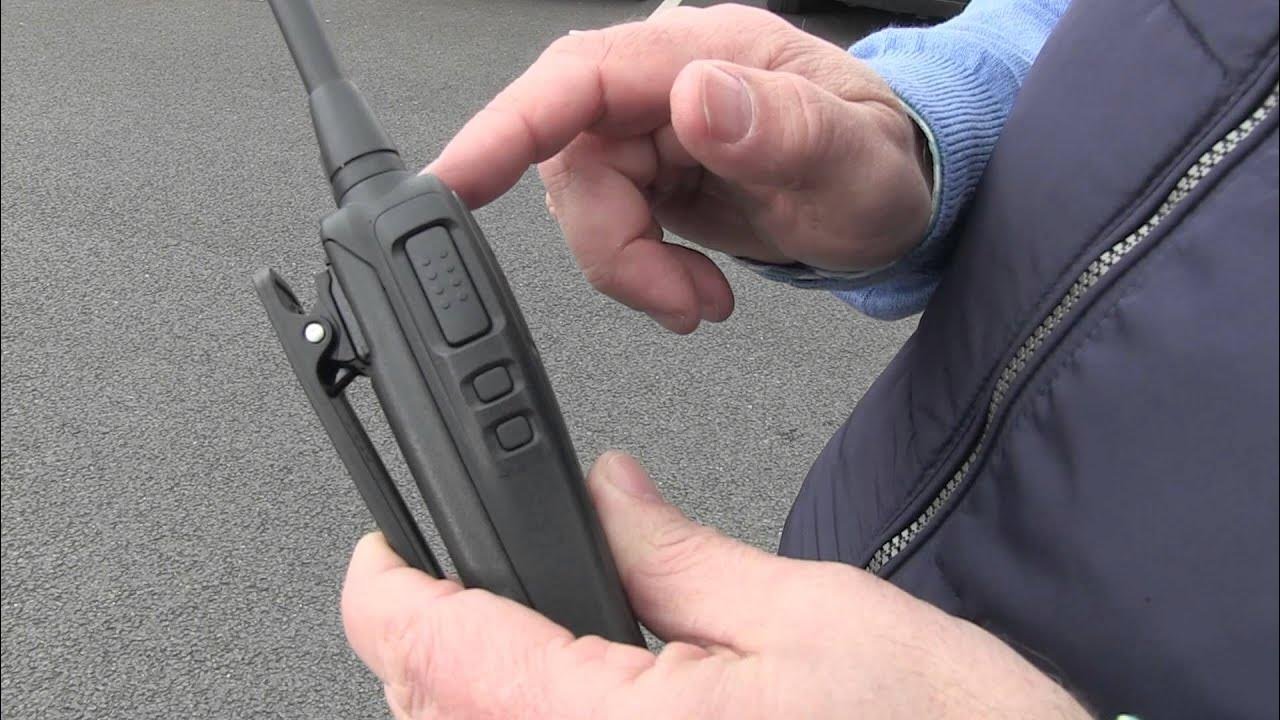
Two-way radios are the most recognizable type. Portable, user-friendly, and instant. You push to talk and release to listen.
They’re widely used in:
- Retail stores
- Construction sites
- Event management
- Outdoor adventures
These radios typically operate on VHF or UHF bands. Some are license-free (FRS), while others require licensing (GMRS or business frequencies). Their appeal lies in simplicity. No contracts. No monthly fees. Just instant communication.
CB Radios
Citizens Band (CB) radios became famous among truck drivers. Operating on 27 MHz, they allow short-distance communication without licensing in many regions. Truckers use them for traffic updates and road conditions. Hobbyists still enjoy CB radio culture.
Ham (Amateur) Radios
Ham radios are powerful and versatile. Operators require licenses, but the capabilities are impressive. Ham radio users can communicate globally, experiment with antennas, and even assist during disasters when other systems fail.
Marine Radios
Marine radios operate on dedicated VHF frequencies reserved for maritime use. Channel 16, for example, is the international distress channel. These radios are waterproof and essential for safety at sea.
Aviation Radios
Aviation radios operate on specific airband frequencies. Clear, interference-free communication is critical between pilots and air traffic control. Precision and reliability define these systems.
Business and Commercial Radios
Businesses rely on professional-grade radios for coordination. These devices often feature encryption, repeaters, and digital capabilities. From warehouses to hotels, they streamline operations efficiently.
Analog vs. Digital Radios
Key Differences
Analog radios transmit continuous signals. Digital radios convert voice into data. Digital offers clearer audio and advanced features.
Pros and Cons of Each
Analog:
- Simpler
- Often cheaper
- Gradual signal fade
Digital:
- Clearer audio
- Encryption
- Better battery efficiency
- Higher initial cost
Conclusion
Communication radios are far from obsolete. They remain one of the most reliable, efficient, and secure methods of instant communication. Whether you’re coordinating a construction project, navigating open waters, responding to emergencies, or exploring the wilderness, radios provide dependable connectivity without relying on fragile infrastructure.
In a world obsessed with smartphones, communication radios quietly continue doing what they’ve always done best—keeping people connected when it matters most.
